If readers already know you from a podcast, newsletter, coaching program, or speaking events, hearing your book in your own voice can feel like a natural extension of your brand. Voice cloning gives authors a way to preserve that familiarity without recording every chapter live.
The appeal is clear, but the best results still depend on preparation. Good source audio, clean text, and realistic expectations matter far more than hype. When those pieces are in place, voice cloning can become one of the most practical paths into audiobook production.
What voice cloning actually does
Voice cloning learns the recognizable traits of your speech such as pacing, tone, rhythm, and accent, then uses those traits to generate new narration from your manuscript. In practical terms, it creates the experience of your voice reading material you did not personally record line by line.
It is not magic and it is not a perfect substitute for a live performance. What it does offer is consistency, efficiency, and a strong sense of familiarity when the underlying voice sample is clear and natural.
When voice cloning is the right choice
Voice cloning tends to work best when the value of sounding like you outweighs the value of theatrical performance. That is especially true for nonfiction and personal brand-driven books.
- Your audience already knows and trusts your voice from videos, podcasts, webinars, or talks.
- Your book is nonfiction, memoir, business, or educational content with a direct author-reader relationship.
- You want more predictable pricing than traditional narrator fees often allow.
- You may want to revise, expand, or refresh the audiobook later without rebooking studio time.
It is a weaker fit for novels with many characters, dialogue-heavy scenes, or books where dramatic performance is central to the listening experience. In those cases, a professional narrator or a carefully chosen synthetic voice may serve the material better.
The preparation that matters most
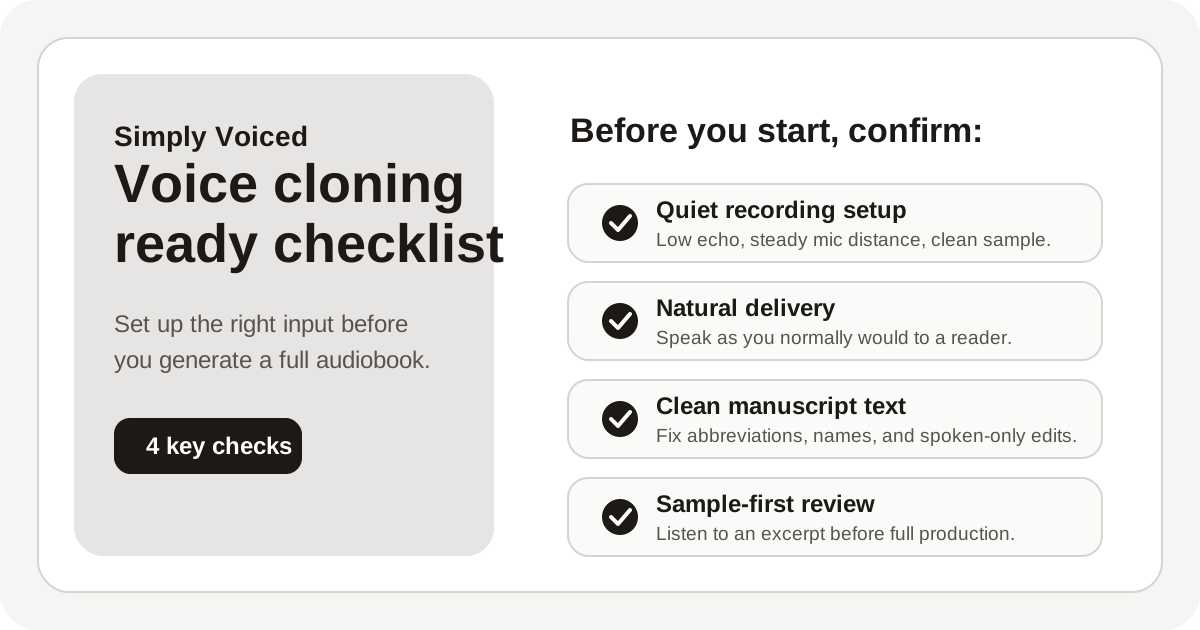
Strong results usually come from a simple preparation routine, not expensive equipment. Before you record your sample, focus on the inputs that have the biggest effect on output quality.
- A quiet room. Background hum, echo, and traffic noise reduce clone quality more than most authors expect.
- A consistent recording setup. Use the same microphone, distance, and speaking volume throughout the sample.
- Natural delivery. Read as yourself rather than trying to sound like a broadcaster. The clone should learn your everyday speaking voice.
- A manuscript pass for listening. Fix awkward line breaks, abbreviations, uncommon names, and phrases that may sound wrong when spoken aloud.
What the finished audio tends to sound like
A well-prepared cloned voice usually sounds steady, intelligible, and recognizably yours across long-form content. What you gain is endurance and consistency. What you may give up is the spontaneous emotional variation that can happen in a live read.
That tradeoff is acceptable for many books, especially when the goal is clarity, trust, and efficiency. It is less attractive when the audiobook depends on heavy character acting or dramatic timing.
Review before you scale
The smartest workflow is to test early. Ask for a short section that includes your natural explanatory tone, a few proper nouns, and at least one passage with emotional emphasis. That sample will tell you much more than a polished demo paragraph ever could.
As you review, listen for three things: pronunciation accuracy, whether the pacing feels believable, and whether the voice still sounds like someone your readers already know. If one of those elements misses, fix it before you generate the full book.
How the economics usually compare
For many independent authors, the economic case is one of the biggest reasons to consider cloning. Traditional audiobook production often scales with finished hours and revision costs. A cloned-voice workflow is usually easier to budget because you spend less on performance logistics and more on setup, review, and controlled production.
That does not mean it is automatically the cheapest path in every case. The real advantage is that authors get more control over where time and money go, especially when they want a clear process rather than a traditional studio project.
A practical decision framework
If you are deciding whether to move forward, ask four simple questions:
- Will my audience value hearing this book in my voice specifically?
- Is the book more about clarity and connection than character performance?
- Can I provide a clean sample and take time to review test chapters carefully?
- Do I want a production path that stays flexible if I revise the book later?
If the answer is yes to most of those, voice cloning is likely worth a serious look. Simply Voiced is built for that exact workflow, giving authors a straightforward path from voice sample to reviewable audiobook without turning the process into a studio project.