Audiobooks keep growing because readers want to listen while they drive, walk, cook, and work. For independent authors, that creates a practical question: how do you turn a finished manuscript into an audiobook without getting pulled into studio logistics, narrator sourcing, and a string of unfamiliar production decisions?
The most reliable answer is not adding more vendors. It is simplifying the path. When authors break audiobook production into a few understandable stages, the whole process feels less risky and much easier to finish.
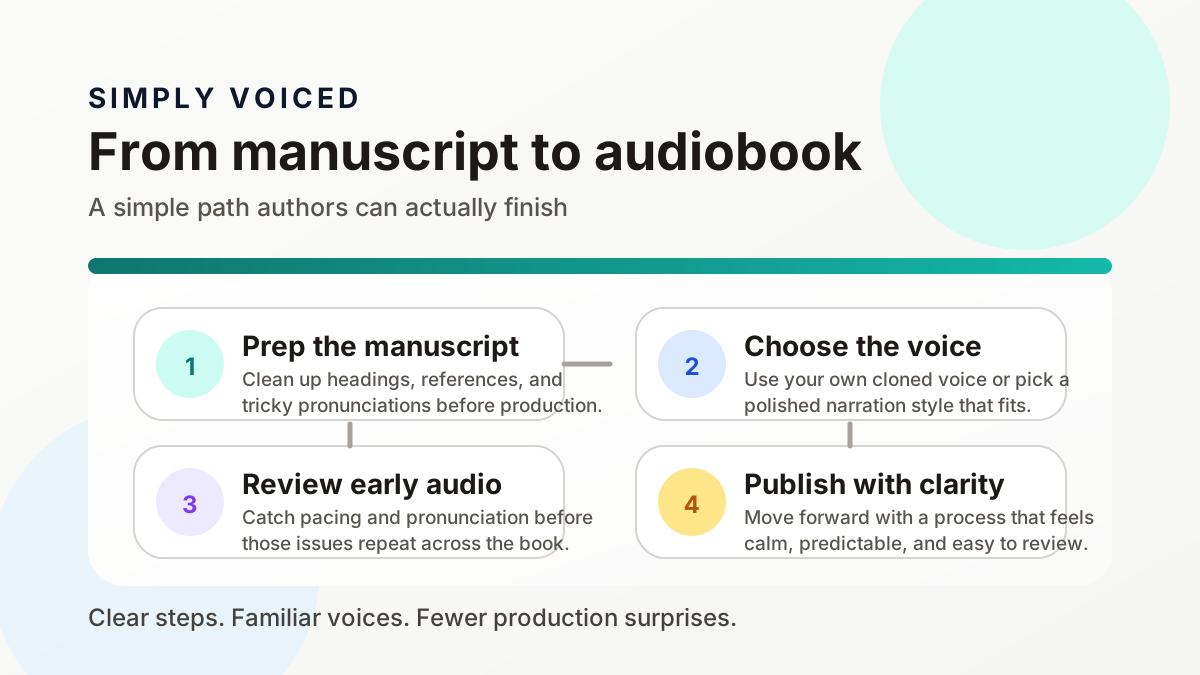
1. Start with a manuscript that is ready for listening
A print manuscript and an audiobook script are close cousins, but they are not always identical. Read through your book with your ears in mind. Long citations, dense tables, visual references, and repeated headers may need light cleanup so the spoken version sounds natural when someone hears it instead of sees it.
- Remove content that only makes sense on the page, such as image callouts and table references.
- Check chapter titles and transitions for clarity when spoken out loud.
- Flag names, acronyms, and unusual terms that may need pronunciation notes.
- Shorten extra-long sentences that feel dense when read aloud.
This step is where many audiobook projects quietly go off track. A clean listening script reduces revisions later, whether you use your own voice, a cloned voice, or a curated narration option.
2. Choose a narration style that matches your audience
Some books benefit from a calm, trustworthy narrator. Others work best with more energy and personality. If your readers already know your voice, voice cloning can help preserve that familiarity. If not, a curated synthetic voice can still give you a polished result that fits the tone of your book.
The key is not chasing novelty. It is choosing a voice your listeners can stay with for hours and one you will feel confident reviewing chapter after chapter.
A quick way to decide
- Use your own or a cloned voice when your audience already knows how you sound.
- Use a curated synthetic voice when you want speed, consistency, and simpler setup.
- Use traditional narration when performance is central to the listening experience.
3. Understand the economics before you commit
Traditional audiobook production is often priced per finished hour, which can add up quickly for longer books. That model works for some authors, but it can be a barrier for writers who want to validate demand first or keep production lean. A simpler workflow with clear, fixed pricing helps you move forward with fewer surprises.
Before you start, ask what happens if you need small edits. A simple production path should make it easy to fix pronunciation, pacing, or manuscript cleanup without turning every change into a new scheduling problem.
4. Review the audio in stages, not all at once
Do not wait until the entire book is complete before listening. Review an early sample, then listen to chapters as they are produced. That gives you a chance to catch pronunciation issues, pacing problems, or script cleanup before those details repeat across the entire book.
- Approve a short sample before full production begins.
- Check the first chapter carefully for tone and pronunciation.
- Listen again near the middle to confirm consistency.
- Do a final spot-check before distribution.
Keep the process simple enough to finish
The best audiobook workflow is the one you can actually finish. If your current path feels too expensive, too technical, or too slow, simplify it. Start with one finished manuscript, one clear voice choice, and one system that lets you move from upload to review without confusion.
That is the promise behind Simply Voiced: helping authors turn books into audiobooks with a workflow that feels understandable from the first step to the final file. If you want a more appealing path than stitching together freelancers, studio sessions, and spreadsheets, start by making the process smaller and clearer.