"How long will this take?" is one of the most practical questions an author can ask before starting an audiobook project — and one of the hardest to answer with a single number. Realistic timelines range from a few weeks to several months, and the difference usually comes down to your production path, your book's length, and how quickly you can review chapters as they are produced.
Understanding what happens at each stage helps you plan a timeline that fits your actual schedule, not someone else's best-case estimate.
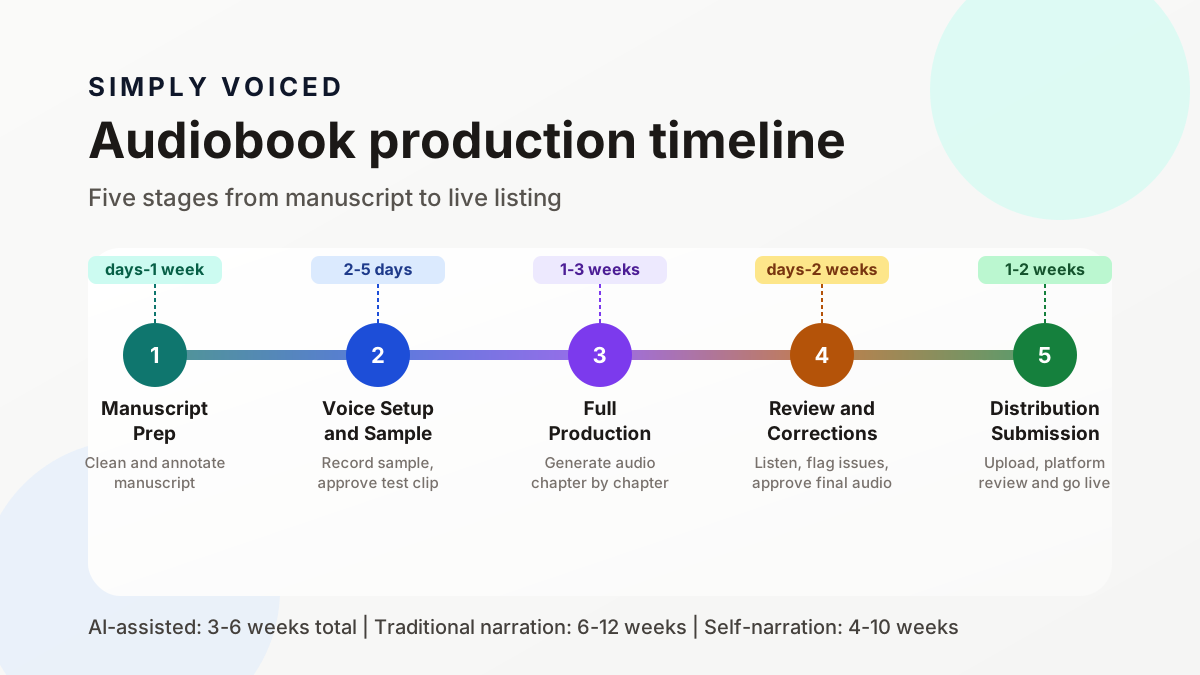
Stage 1: Manuscript preparation (a few days to one week)
Before production can begin, your manuscript needs a listening pass. Tables, footnotes, image captions, long URLs, and print-only formatting elements all need decisions: adapt, simplify, or remove. Numbers and dates should be written out in words so narration sounds natural. Unusual proper nouns and technical terms benefit from a short pronunciation guide.
For a typical nonfiction book, this preparation takes two to five focused hours. Authors who skip this step tend to face more revision requests during review, which adds time later in the process.
Stage 2: Voice setup and sample review (two to five days)
If you are using voice cloning, this stage involves recording and submitting your voice sample, then reviewing a short test passage to confirm the clone sounds accurate before full production begins. If you are using a pre-built synthetic voice, you select your voice and approve a sample chapter. If you are working with a human narrator, this stage involves casting, briefing, and approving a sample read.
In AI-assisted and voice-cloning workflows, this stage often takes two to five days, including the time to record a good sample, submit it, and receive an initial test back for review. Traditional narrator casting can take longer depending on availability and response times.
Stage 3: Full production (one to three weeks, depending on book length)
This is the stage where your manuscript becomes audio. The time required depends on how your audiobook is being produced and how long the book is.
- AI-assisted and voice-cloning workflows can generate full audio much faster than live recording. A 60,000-word book — roughly six hours of finished audio — can move through production in days to a week once setup is complete.
- Traditional narration depends on the narrator's schedule and studio availability. Recording six hours of finished audio typically requires twelve to fifteen hours of session time to account for takes, retakes, and editing. Many narrators book out two to four weeks in advance.
- Self-narration in a home studio is entirely in your hands, but it requires consistent sessions. Authors recording themselves often find that one to two hours of finished audio per recording day is a realistic pace, which means a mid-length book can take two to three weeks of sessions.
Stage 4: Review and corrections (a few days to two weeks)
Most production workflows include a review stage where you listen to finished chapters before they are finalized. This is the right moment to catch pronunciation errors, pacing issues, and any passages that did not survive the transition from page to audio.
How long this takes is largely up to you. Authors who set aside dedicated listening time move through review quickly. Authors who review in small gaps between other commitments can stretch this stage over several weeks. A practical approach is to review in chapter batches rather than waiting for the full book to be complete, which also lets you catch recurring issues before they appear in every chapter.
Stage 5: Distribution submission and platform review (one to two weeks)
Once audio is approved, you need to prepare files for distribution, format your cover image, and submit to your chosen platform or platforms. Most submission processes are straightforward, but platform review times vary.
- ACX (Audible/Amazon): Typically reviews new submissions within seven to ten business days for audio quality compliance.
- Findaway Voices / Authors Republic: Wide-distribution aggregators usually process new titles within five to seven business days after approval.
- Direct sales on your own site: No third-party review required — you can publish immediately once files are ready.
What a realistic end-to-end timeline looks like
The comparison below gives a rough range for each production path, assuming a mid-length nonfiction book of roughly 50,000–70,000 words.
- AI-assisted or voice-cloning workflow: Three to six weeks from manuscript prep to live listing. Faster if you move through review quickly; longer if revisions accumulate or distribution platforms have review backlogs.
- Traditional narration: Six to twelve weeks is common when you account for narrator availability, session scheduling, post-production editing, and distribution review.
- Self-narration in a home studio: Four to ten weeks, depending on your recording pace and how much time you have available for sessions.
The most common cause of delays
In practice, the most common reason audiobook projects take longer than expected is not production time — it is review time. Authors who plan time to listen to chapters regularly during production stay on schedule. Authors who wait for everything to be done before they start reviewing often find the correction cycle compressed and stressful.
A few small habits help: listen to test sections as early as possible, review in short daily sessions rather than long weekend marathons, and keep a running list of corrections rather than trying to remember them. Those habits turn a vague "I'll check it when it's done" into a predictable review schedule.
Getting from manuscript to finished audiobook faster
The clearest way to shorten your timeline is to reduce the number of handoffs and decisions along the way. A focused production workflow — where manuscript prep, production, review, and file delivery are handled in one clear sequence — moves faster than one that requires coordinating vendors, managing multiple file formats, and chasing availability across a scattered schedule.
Simply Voiced is built to help independent authors move through exactly that kind of streamlined process. If you want to go from finished manuscript to distribution-ready audiobook without a sprawling timeline, starting with a clear production path is the most important choice you can make.